Growth and Online Presence - 5 min read
How Barber Loyalty Programmes Work: For Customers and Shop Owners
A loyalty programme rewards regular clients for coming back, usually with a free or discounted cut after a set number of visits. To compare plans that include a built in digital lo
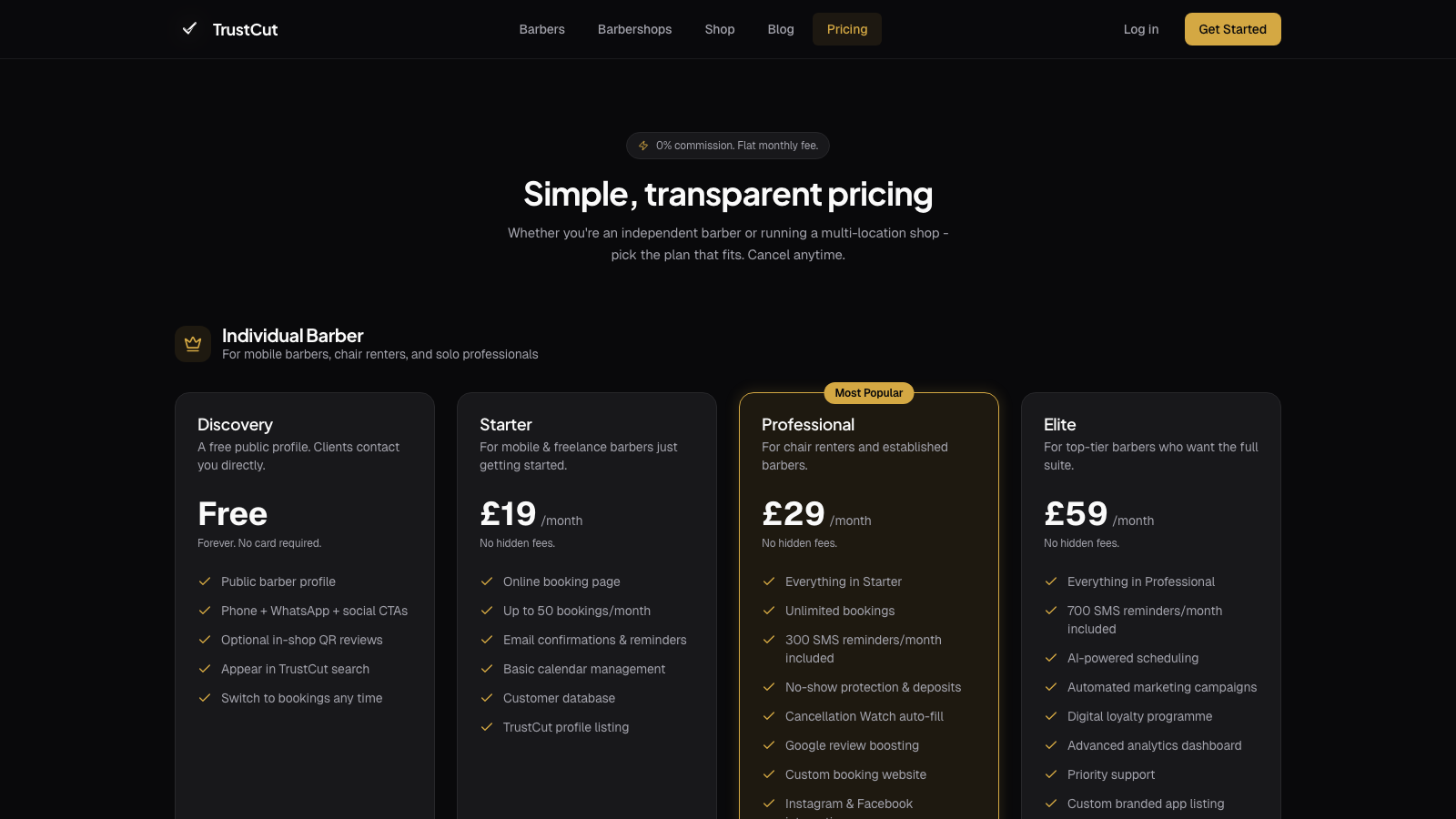
A loyalty programme rewards regular clients for coming back, usually with a free or discounted cut after a set number of visits. To compare plans that include a built in digital loyalty programme, see TrustCut pricing.
What a loyalty programme actually is
In barbering, a loyalty programme is a simple deal: come in often, get something free or reduced now and then. The most common shapes are:
- Every Nth haircut is free, often the sixth or tenth.
- A small discount on every visit after a milestone.
- A birthday cut at a reduced price.
- A referral bonus when a regular client brings in a new one.
The mechanics are easy. The challenge is running it consistently without losing track.
Why barbers run loyalty programmes
A loyalty programme is not just a giveaway. Done well, it does several things at once:
- Encourages clients to rebook with the same shop rather than drift.
- Smooths income, because the gap between visits gets shorter.
- Creates a small moment of delight for the regular.
- Gives clients an easy reason to recommend the shop.
- Cuts the cost of finding new customers.
The maths usually works because a free cut every ten visits costs the shop one tenth of one cut, while the lift in retention is often greater than that.
Paper cards versus digital
The old style is a paper stamp card. The new style is a digital counter inside the booking system. The difference matters:
- Paper cards get lost, forgotten or duplicated.
- Stamp counts can be hard to verify.
- Digital counts are tied to the booking record, so they are accurate.
- Digital systems can apply the reward automatically at checkout.
- Digital systems can pause if a client switches barbers.
For a small chair renter, paper still works. For any shop running more than one chair, a digital programme is far easier to keep honest.
How a digital programme works on TrustCut
On TrustCut, the digital loyalty programme is included in the shop plan that covers it, rather than priced as a separate monthly add on. Loyalty is tied to completed bookings, so the count is always accurate. The general flow is:
- The shop sets an interval, for example every tenth visit.
- Each completed appointment counts toward the next reward.
- When the interval is reached, the next eligible booking is marked as a redemption.
- The reward applies automatically, with the price set to zero or reduced.
- The client sees their progress in their account.
Because it is tied to real bookings, there is no card to forget, no manual tally to lose and no awkward conversation at the till about whose turn it is.
What clients should know
If you are a client, a loyalty programme is worth using when:
- You already visit one barber regularly.
- The shop runs the programme consistently for everyone.
- The reward is meaningful, not symbolic.
- The interval is realistic for your cut frequency.
You should not change shops just to chase a programme. The value of a steady barber who knows your hair is greater than a free cut now and then. Use loyalty as a small bonus, not as the reason to choose a shop.
What shop owners should think about before launching one
Before turning on a loyalty programme, work through the basics:
- Decide the interval. Six visits is generous. Ten is common. Twelve is conservative.
- Decide the reward. A free standard cut is the simplest.
- Decide whether the reward is the headline service or a junior cut.
- Decide whether deposits still apply on the reward booking.
- Decide whether the reward can be used at peak times.
Write the rules down, in client friendly language, and put them on the booking page. Inconsistent application is what kills loyalty programmes faster than any other mistake.
Common pitfalls
A few patterns to watch for:
- Making the reward too small to notice.
- Making the interval so long no one reaches it.
- Excluding so many services that the programme feels grudging.
- Forgetting to apply it and arguing with regulars who track it.
- Changing the rules without telling clients.
The point of loyalty is trust. Anything that breaks that trust costs more than the saved cut.
Measuring whether it works
A simple monthly check is enough:
- How many active clients have a loyalty count above zero.
- The average visit gap before and after the programme.
- Total redemptions paid out.
- New clients gained through referrals.
- Reviews mentioning the programme.
If retention has lifted and the visit gap has shrunk, the programme is paying for itself. If nothing has moved, the reward may be too small or too distant.
When a loyalty programme is the wrong tool
Loyalty is not a fix for every problem. It is the wrong tool when:
- The cut is the problem. Clients leave because the work is inconsistent.
- The booking journey is the problem. Clients give up before they book.
- The pricing is the problem. The shop is too expensive for repeat use.
- The shop is brand new and has no diary to retain.
Fix those first. Loyalty rewards habit. Habit cannot form on top of bad cuts or chaotic bookings.
Quick recap
- Loyalty programmes reward regular clients with a free or discounted cut.
- Digital tracking is more reliable than paper cards.
- Pick a realistic interval and a reward that means something.
- Write the rules down and apply them consistently.
- Use the programme to lift retention, not to fix deeper problems.
Done well, a loyalty programme quietly turns occasional clients into regulars and regulars into long term ones.
Useful next step